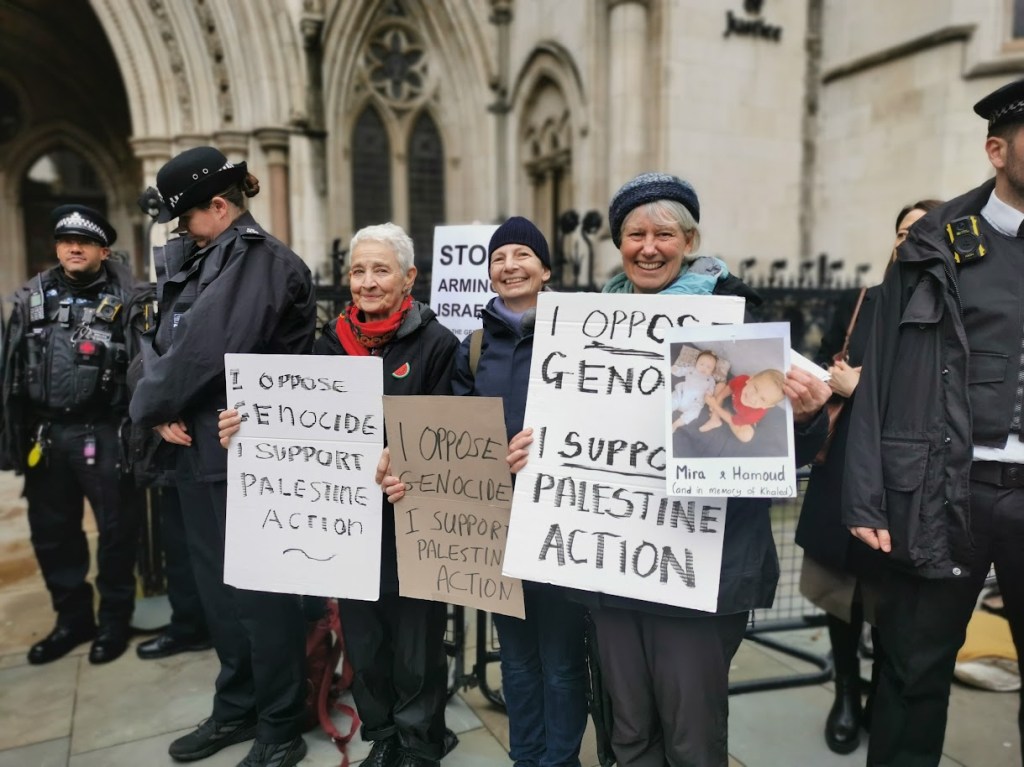
The decision by the High Court to quash the Home Secretary’s proscription of Palestine Action must have immediate consequences for those who sought to enforce it. Thousands of people have been arrested and dozens had their homes raided and faced onerous bail conditions as a result of Yvette Cooper’s unlawful action. Dozens of prisoners detained on remand without trial experienced harsher conditions on the pretext that although none have been charged with terrorist offences, they had a “terrorist connection” as a result of proscription. All charges must be dropped and all those on remand granted immediate bail. The Palestine Coalition are right to call for the resignation of Met Police Commissioner Mark Rowley, Yvette Cooper and Shabana Mahmood.
The court’s decision on 13 February vindicates all those who were prepared to challenge an authoritarian manoeuvre by an increasingly weak and unpopular government, which is still prepared to throw our civil rights out of the window in order to protect its alliance with the Israeli state and weapons manufacturers complicit in genocide and annexation.
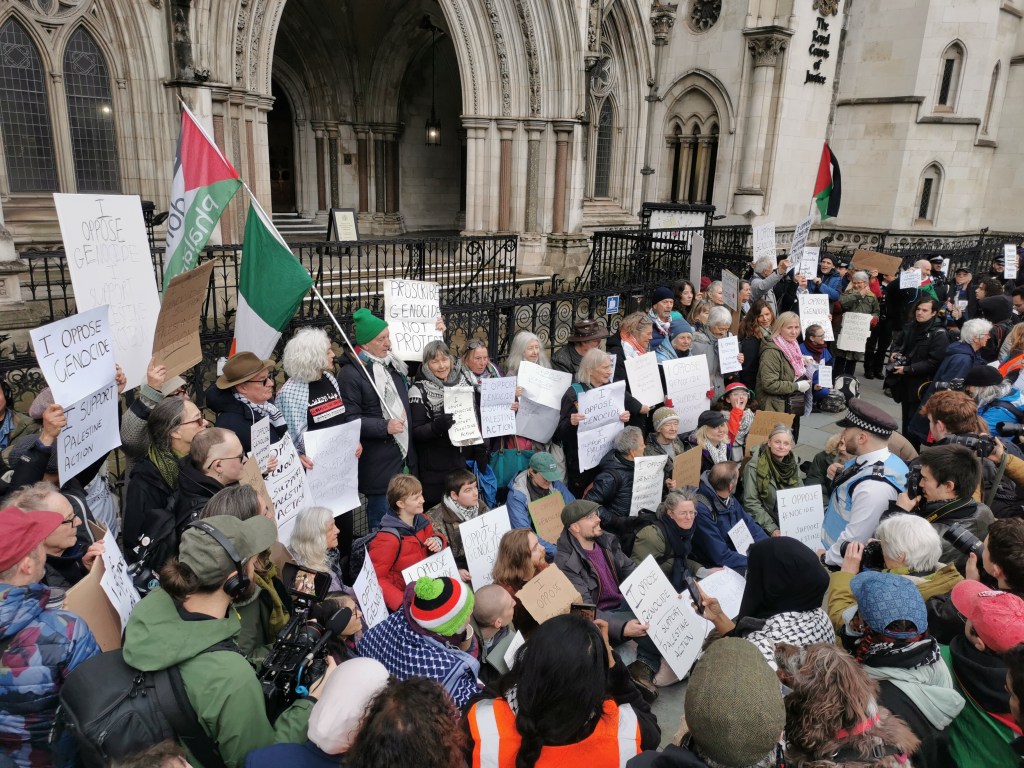
Crucially it shows why it is vital to resist collectively in the streets and workplaces, not just the courts. It was the scale of defiance despite the risks which has shown the machinery of the state just how high the political costs of enforcing the ban would be. The extraordinary courage and resilience of the prisoners detained in connection with Palestine Action and the hunger strikers forced even the corporate media to pay some attention to the scale of the scandal. The verdict in the Filton 6 case, where jurors acquitted some defendants on charges which were a central plank of the Home Secretary’s case for proscription, and failed to convict others, is also highly significant.
The government’s justification of its shameful facilitation of Israeli crimes against humanity is clearly still abhorrent to huge numbers of people across Britain, and these two court decisions are an echo of that mood. Tens of thousands will continue to organise in every space across society to stop the machinery of genocide and apartheid which is still killing Palestinians, and that movement needs to put down even deeper roots to succeed.
There is another vital lesson of the Lift the Ban campaign. Unity and coordination across different parts of the mass movement for Palestine and the trade unions are essential. Civil disobedience on a mass scale worked in combination with mass marches, petitions and statements and union motions from local branches to TUC Congress. Everyone who shared our open letters, who brought their union banner to a witness circle to witness arrests or who spoke up for a colleague facing disciplinary action at work has played a part in making proscription unworkable. That is why this is a victory not just for the whole of the Palestine solidarity movement, but for climate activists, trade unionists and anyone active in movements for justice, liberation and equality.
But make no mistake that the battle to defend our rights is far from over.
Proscription is only one part of a multi-pronged attack on our civil liberties. Since the Home Secretary’s ill-fated decision last July we have seen further evidence of a widening crackdown. This includes the government’s attempt to ban protests on the pretext of “cumulative” effects, further use of High Court injunctions by universities against protests and now by Birmingham City Council against supporters of striking bin workers, along with criminalisation of the word “intifada” in the context of protests. Meanwhile cases using existing public order laws continue against Palestine Coalition leaders are still going through the courts.
As Huda Ammori rightly pointed out, the British government is taking its cue from Trump and his authoritarian, far-right regime in the US. The attempt to popularise the idea that direct action and civil disobedience are forms of “domestic terrorism” has experienced a major setback because of the scale of resistance, but we have to redouble our efforts and broaden our campaign to defend our right to protest and speak out against genocide and war.
Protest is not Terrorism
What you can do:
- Pass a motion in your union branch – model motions including updated versions following the High Court ruling of 13 February: https://tinyurl.com/PNTmotion
- Organise to show solidarity with those charged and on trial for protesting against genocide, especially prisoners on remand – take a collection for legal fees among colleagues at work
- Defend anyone facing victimisation by their employer for taking part in Palestine protests
 Protest is not terrorism
Leave a comment